
Water Intake for Kids: A Pediatrician’s Guide to Healthy Hydration
Water intake for kids is an important part of supporting healthy growth, development, digestion, and overall wellness. While adults often focus on drinking enough water, many parents are surprised to learn that hydration needs change significantly throughout infancy and early childhood.
The good news is that understanding healthy hydration doesn’t have to be complicated. Knowing when to introduce water, how much to offer, and what signs of dehydration to watch for can help keep your child healthy year-round.
Water Intake for Kids: Birth to 6 Months
For babies younger than 6 months old, water intake for kids is actually very simple:
Babies under 6 months should not drink water.
Breast milk and infant formula already contain all the fluids infants need.
Giving water too early can dilute important electrolytes in the bloodstream and may lead to dangerous complications, including seizures.
Parents should avoid:
- Plain water
- Diluted formula
- Diluted breast milk
Instead, continue feeding breast milk or formula on demand.
Water Intake for Kids: 6 to 12 Months
Once babies begin eating solid foods around 6 months of age, small amounts of water can be introduced.

Water serves several purposes:
- Helps babies swallow new foods
- Supports digestion
- May help prevent constipation
Recommended Water Intake
- Serve water in a sippy, straw, or open cup
- Offer 1–2 ounces of water during meals
By approximately 9 months:
- 3 meals daily
- 3–6 ounces of water daily
By 12 months:
- 6–8 ounces of water daily
Remember that breast milk or formula remains the primary source of hydration during this stage.
Water Intake for Kids: 12 to 24 Months
After the first birthday, hydration needs begin to change.
At 12 months:
- Formula is discontinued
- Whole milk becomes part of the diet
- Water becomes increasingly important
Breastfeeding families can certainly continue nursing, but water should now become a regular part of the daily routine.
Hydration Tips for Toddlers
Offer water:
- At meals
- Between meals
- During outdoor play
- After physical activity
A helpful rule of thumb:
One cup (8 ounces) of water per year of life.
For example:
- 1 year old = approximately 8 ounces daily
- 2 year old = approximately 16 ounces daily
Water Intake for Kids Ages 2–5 Years
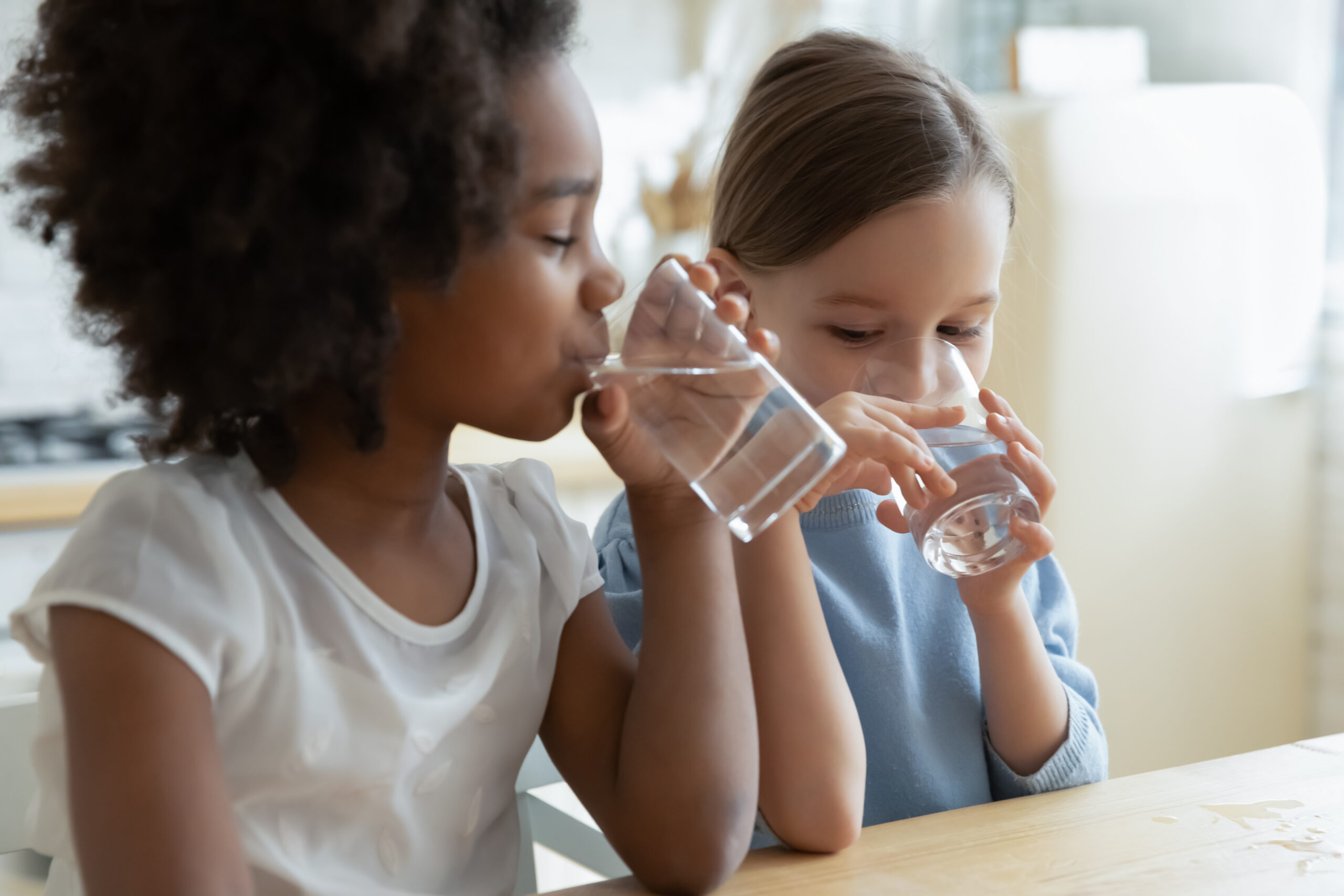
As children become more active, water intake for kids becomes even more important.
Water should now be the primary source of hydration.
At age 2: Aim for approximately 16 ounces daily
At age 3: Aim for 24 ounces daily
At age 4: Aim for 32 ounces daily
At age 5: Aim for approximately 40 ounces daily
Some children may need additional fluids based on:
- Outdoor activity
- Sports participation
- Hot weather
- Illness
A simple strategy is keeping a child-sized water bottle within easy reach throughout the day.
Signs Your Child May Be Dehydrated
Recognizing dehydration early is one of the most important aspects of monitoring water intake for kids.
Parents should watch for:
In Infants
- Sunken eyes
- Sunken soft spot (fontanelle)
- Fewer wet diapers
In Older Children
- Dry mouth
- Cracked lips
- Dark urine
- Fewer bathroom trips
- No tears when crying
- Fatigue
- Irritability
If these symptoms develop, increase fluids and contact your pediatrician promptly.
Tips for Building Healthy Hydration Habits
Helping children develop healthy hydration habits early can benefit them throughout life.
Simple ways to encourage water intake include:
- Offer water at every meal
- Keep reusable water bottles accessible
- Model healthy hydration yourself
- Offer water first when children say they’re thirsty
- Increase fluids during hot Texas summers
Children who regularly drink water are less likely to rely on sugary beverages and develop healthier habits as they grow.
Final Thoughts
Understanding water intake for kids helps parents support healthy growth and prevent dehydration. From infancy through childhood, hydration needs evolve as children grow, become more active, and begin eating a wider variety of foods.
By offering age-appropriate amounts of water, watching for signs of dehydration, and encouraging healthy habits early, parents can help their children stay hydrated and healthy every day.
If you ever have concerns about your child’s hydration, illness, or fluid intake, don’t hesitate to reach out to your pediatrician. We’re here to help keep your children healthy—one sip at a time.