
5 Health Goals for Kids That Encourage Growth, Not Perfection
As a pediatrician, the start of a new year is one of my favorite times to talk with families about setting health goals for kids. Unlike strict resolutions that often fade by February, thoughtful and realistic goals offer a chance to gently shape everyday habits that support your child’s well-being—without the pressure of perfection.
Parents play a powerful role in setting the tone. Even small goals, practiced consistently, can make a lasting difference.
Why Health Goals for Kids Matter
Children don’t need rigid routines to thrive—they need structure, encouragement, and purpose. And the new year offers a natural opportunity to introduce small but meaningful goals that focus on health, behavior, or emotional well-being.
Setting family goals helps build consistency and accountability. More importantly, it teaches kids that progress—not perfection—is the real goal.
Try the “High 5” for Fruits and Veggies
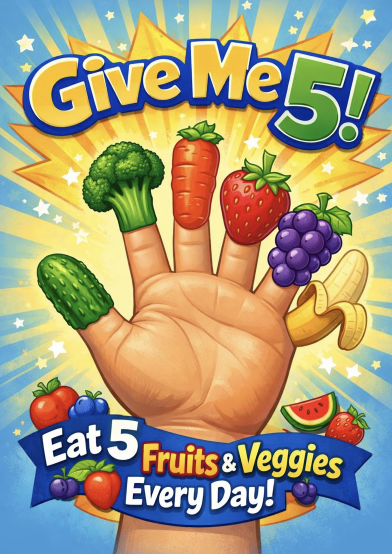
One of my favorite tools is the “High 5” method for encouraging daily fruit and veggie intake. It’s visual, easy to remember, and kids love it.
- Thumb = 1 green veggie
- Index finger = 1 orange, yellow, or red veggie
- Middle, ring, and pinky fingers = 3 different fruits
When your child reaches their daily “High 5,” they get a real high five from a parent. It’s a simple and fun way to track nutrition goals—no complicated charts required.
Health Goals to Personalize for Your Child
Use these sample goals to spark conversation. Choose 1–2 to start, and adjust monthly:
- 30 minutes of joyful movement each day
- Turn off screens 60 minutes before bedtime
- Limit soda or sugary snacks to 1–2 times per week
- Name and talk about one feeling each day
- Set a water intake goal (start small and increase slowly)
- Practice gratitude: list 3 good things at the end of each day
Need more ideas? Check out the American Academy of Pediatrics Healthy Habits list for tips on sleep, diet, activity, and emotional well-being.
Encourage a Growth Mindset
Rather than measuring success by streaks or perfect days, focus on effort. Children who learn to see missteps as learning opportunities are more likely to stay motivated and build resilience.
A growth mindset helps kids:
- Embrace challenges
- Bounce back from failure
- Value effort over outcome
For more on growth mindset, this resource from Positive Psychology is a great place to start.
Reassess and Celebrate Progress Monthly

Consider setting a calendar reminder for the first of each month to reassess your family’s health goals. What’s going well? What’s been challenging? Adjust accordingly—goals should be flexible and evolve as your child grows.
Don’t forget to celebrate small wins—with a hug, a sticker, or a proud moment at dinner. Those tiny acknowledgments go a long way.
Final Thoughts
Setting health goals for kids doesn’t have to be complicated or overwhelming. It’s about creating habits with purpose, not perfection. Whether it’s more movement, better nutrition, improved sleep, or emotional wellness—small changes, repeated often, can lead to a healthier, happier year ahead.
We’d love to hear what health goals you and your kids are setting for 2026! Share with us at your next visit, or tag us on social media to spread some inspiration.